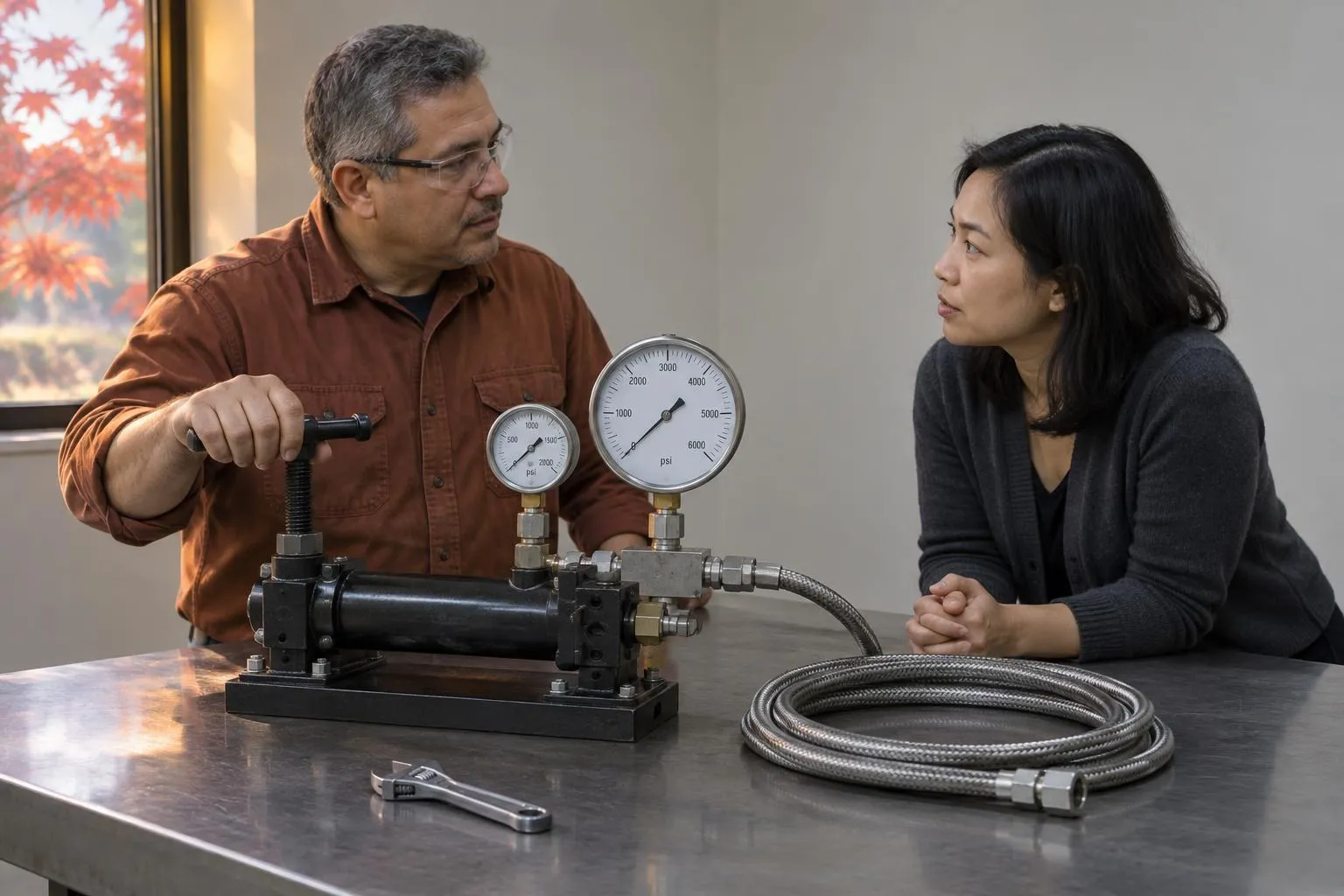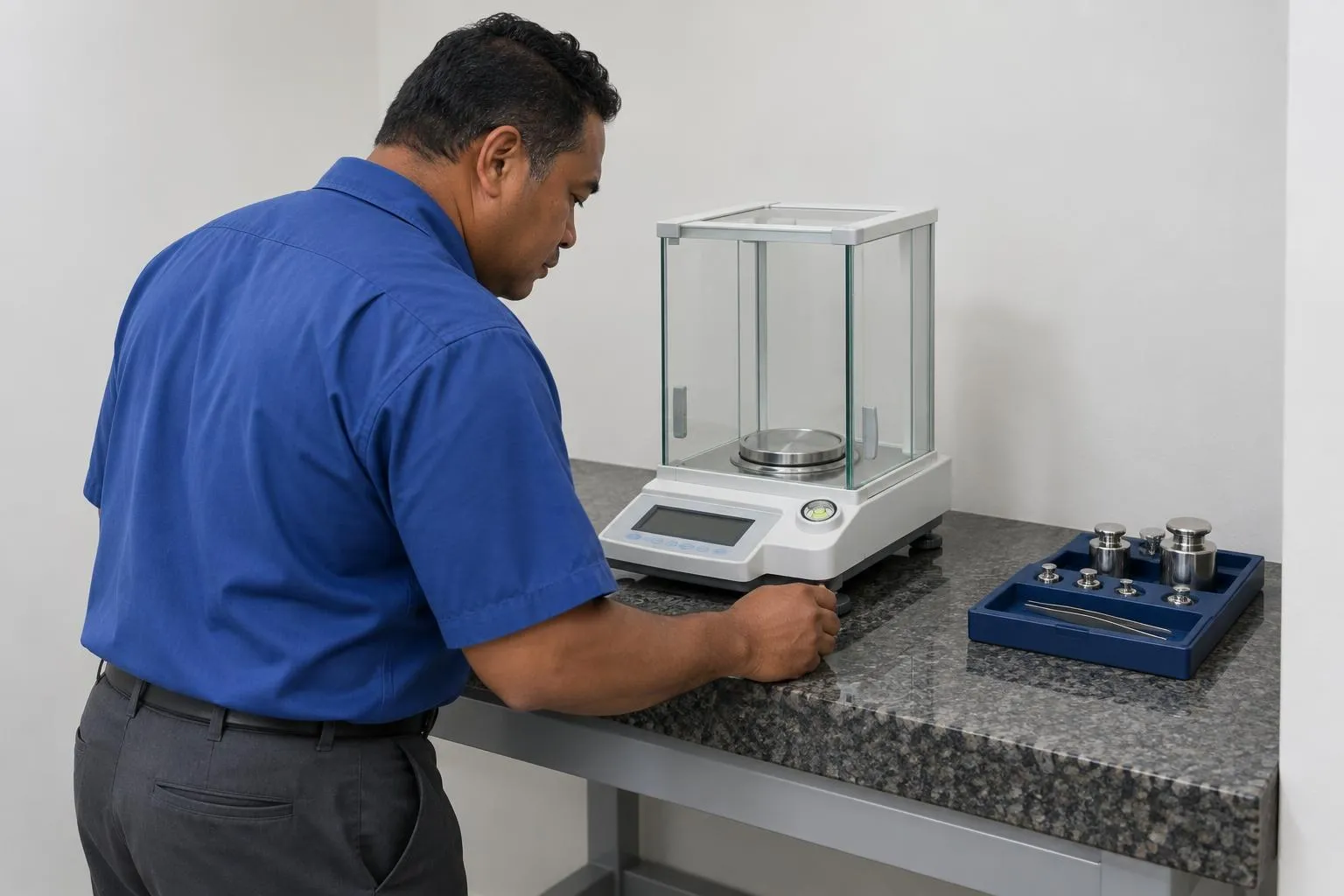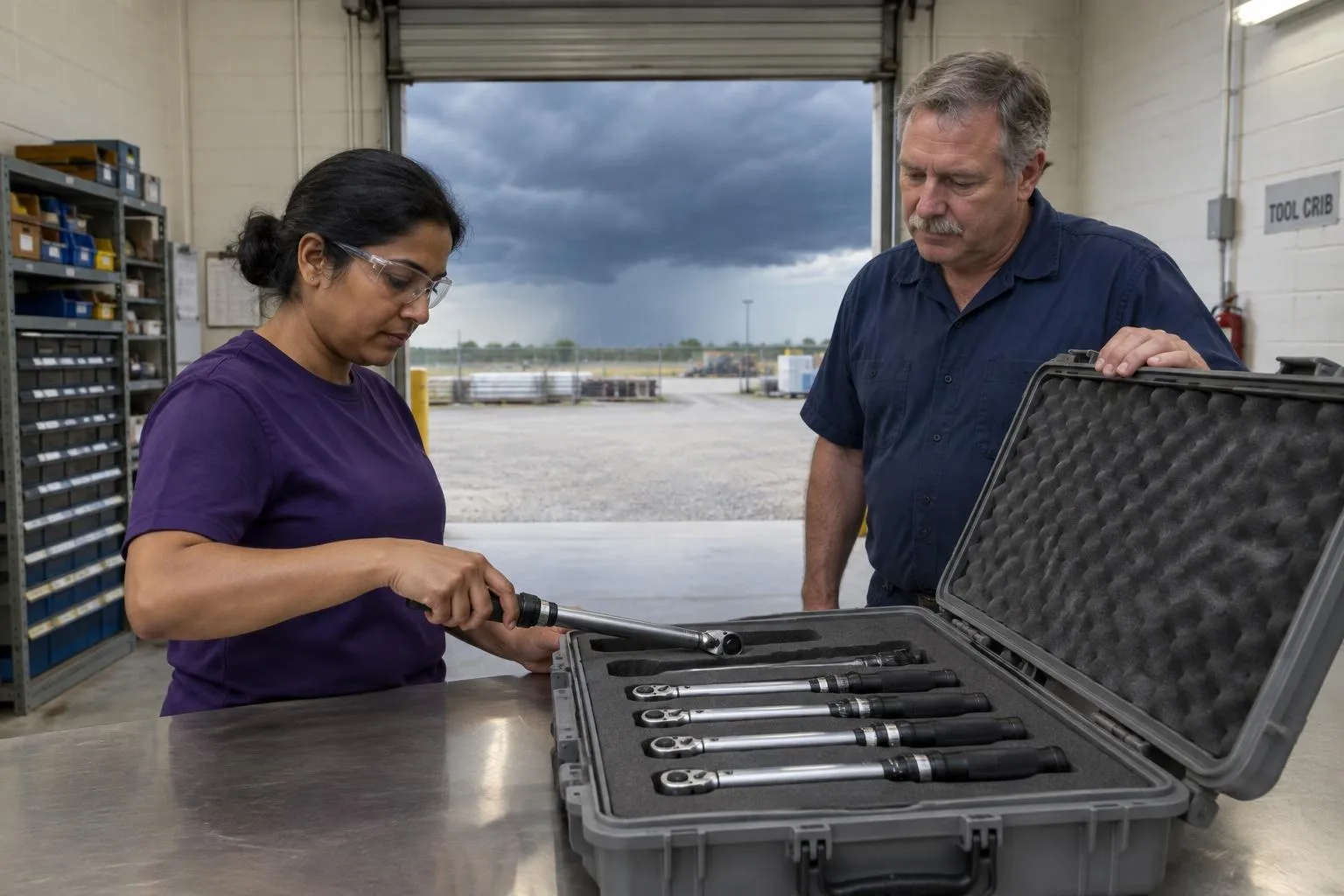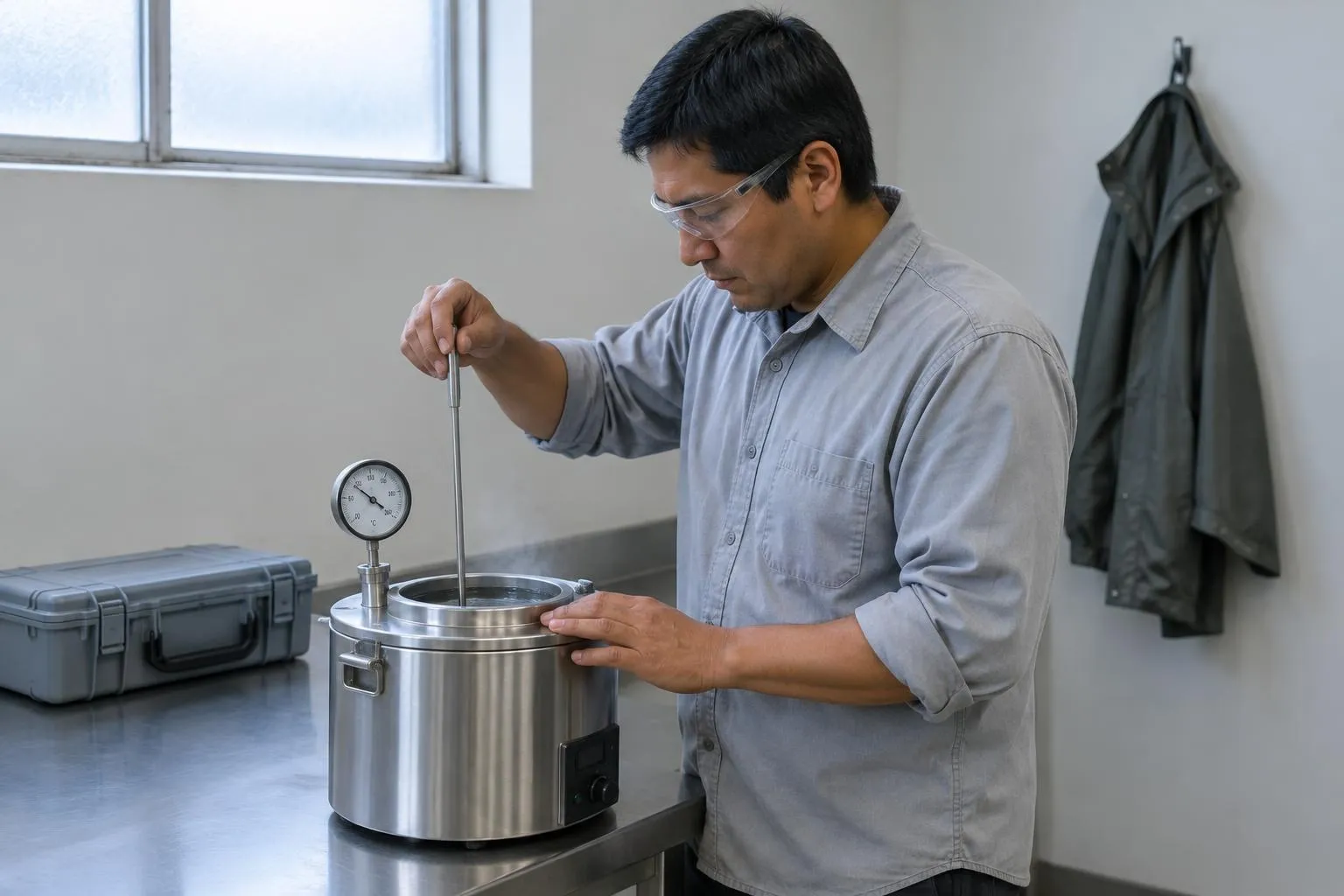
Get free quotes from calibration services near you
Takes about a minute. Free, no obligation; providers reply to you directly.
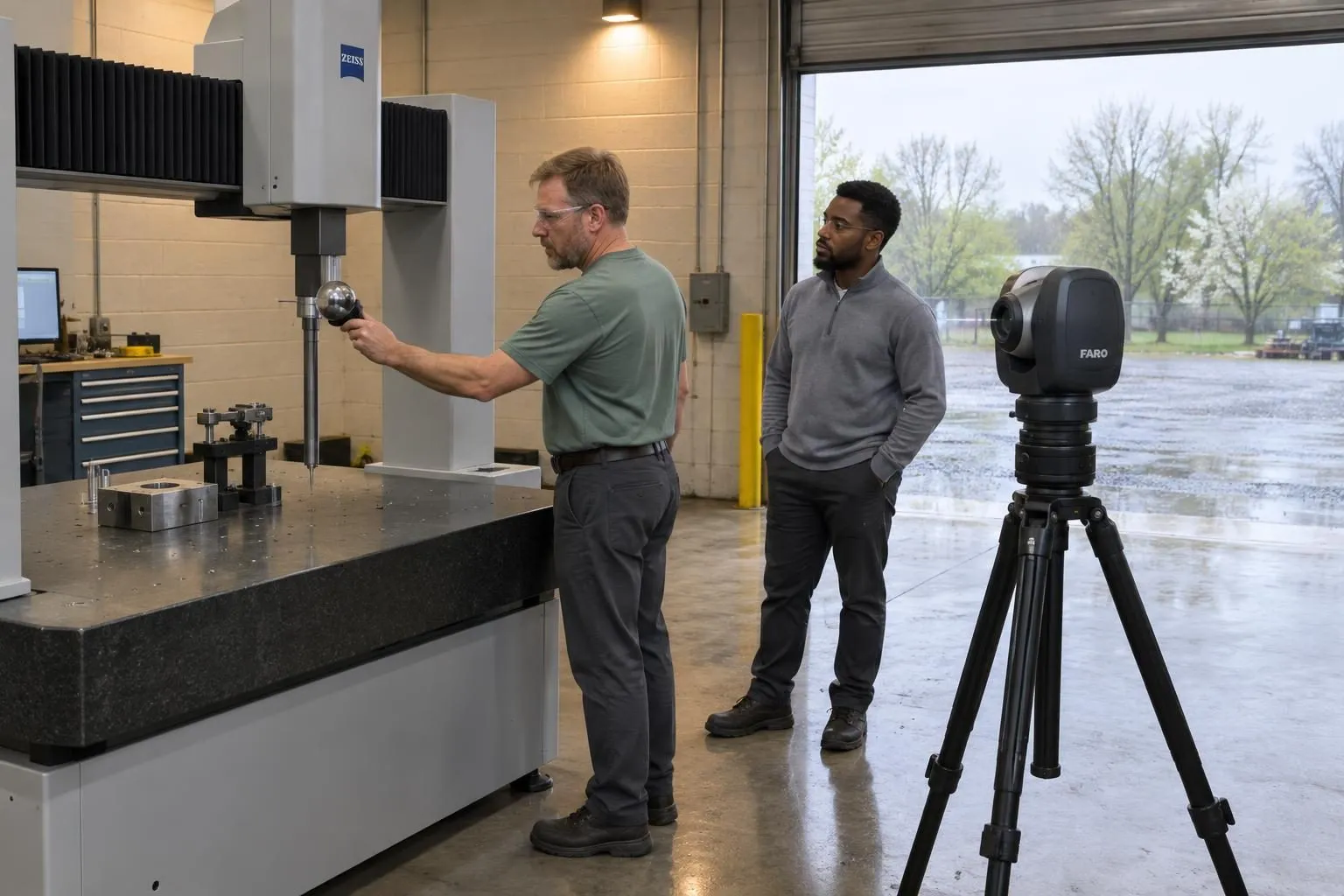
A $40,000 coordinate measuring machine doesn’t ship. That’s what I learned when I tried to get ours calibrated before an AS9100 audit and called every accredited lab within 200 miles. Every single one wanted us to bring it to them. The machine weighs more than my car. The quote for rigging it out of our facility was more than the calibration itself.
That afternoon I found an on-site calibration service that sent a technician with a portable laser tracker and NIST-traceable reference artifacts. Calibration done in four hours. Machine never left the floor.
That experience changed how I think about this entire decision.
The Short Version:Neither format is universally better. ISO 17025-accredited labs win on ultimate precision for small, transportable instruments. On-site calibration wins on downtime, logistics, and anything that can’t move. The smart play — and what most serious facilities already do — is a hybrid: send your reference standards to the lab annually, do on-site quarterly for everything else.
Key Takeaways
- Third-party lab turnaround runs 5 business days on average; on-site services finish same-day or next-day
- On-site calibration traces to the same ISO 17025-accredited lab standards — the accuracy gap is smaller than the labs want you to think
- Large, non-transportable equipment (CMMs, presses, power plant instruments) makes on-site the only practical option
- A hybrid annual/quarterly program satisfies most regulatory requirements without choosing a side
The Pandemic Changed Everyone’s Priors
Before 2020, “send it to the lab” was the default answer for anything precision-critical. Then shipping networks collapsed, lead times stretched to weeks, and manufacturers discovered something inconvenient: their calibration programs had a single point of failure.
On-site calibration went from a niche option to a contingency plan to, for many facilities, the primary strategy. The question stopped being “lab or on-site?” and became “when does each one make sense?”
Here’s the honest comparison.
Head-to-Head: What Actually Matters
| Factor | Accredited Lab | On-Site Calibration |
|---|---|---|
| Turnaround | ~5 business days (plus shipping) | Same-day to 1 day |
| Precision ceiling | Highest — controlled temperature, humidity, vibration | High — portable standards trace to lab benchmarks |
| Traceability | Direct ISO 17025 accreditation | Indirect (traces to accredited lab references) |
| Equipment size limit | Small to mid-size instruments | No practical limit |
| Production downtime | Days to weeks if no spare instruments | Hours to minutes |
| Shipping risk | Damage, loss, delay | None |
| Unit cost (single item) | Higher (shipping adds up) | Competitive — no logistics overhead |
| Unit cost (batch) | Lower — fixed overhead per trip eliminated | Higher — travel costs spread across fewer units |
| Environmental relevance | Calibrated outside operating conditions | Calibrated in actual operating environment |
| Audit documentation | Lab-issued certificate | Technician-issued certificate with traceability chain |
Nobody tells you that last row matters as much as it does. For some regulated industries, calibrating equipment in its operating environment is actually the more technically defensible approach — because a torque wrench calibrated at 68°F in a pristine lab may behave differently on a 95°F manufacturing floor.
Reality Check:The “labs provide higher accuracy” claim is true but narrower than it sounds. The gap exists at the extreme edges of measurement uncertainty. For most industrial calibrations — pressure gauges, torque wrenches, dimensional tools, temperature sensors — on-site portable standards are traceable to the same NIST chain. A tenth of a micron matters in metrology research. It matters a lot less for your quarterly valve calibration.
When You Absolutely Need the Lab
Some situations aren’t judgment calls.
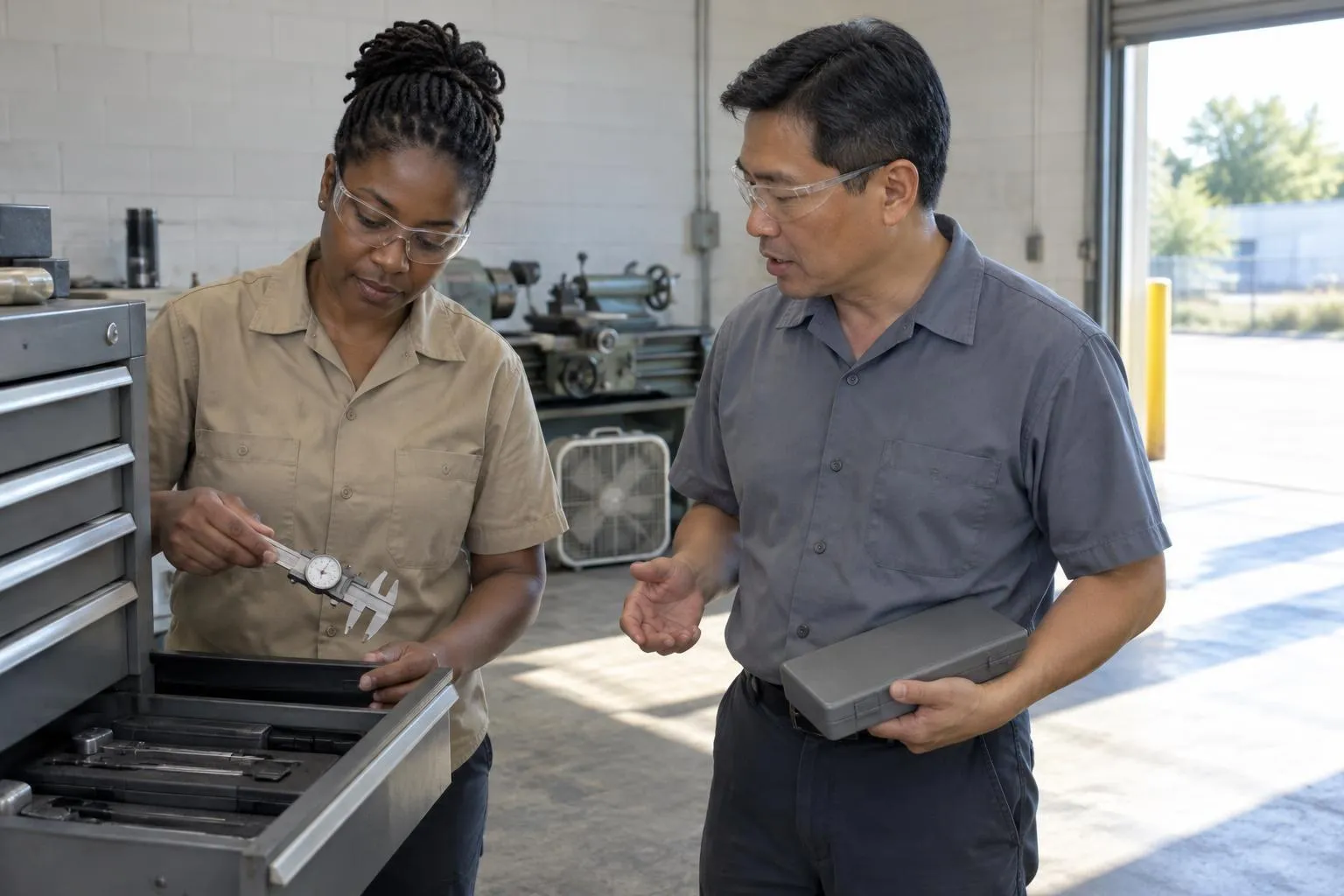
Primary reference standards. Your shop’s reference gauge blocks, master ring gauges, or calibration weights need periodic lab recertification under controlled conditions. No portable setup matches that environment. Send them annually — or whatever interval your ISO 17025-accredited lab recommends.
Instruments outside on-site scope. Portable calibration equipment has real limits. Highly specialized setups — certain optical comparators, precision balances below specific tolerances, some RF equipment — require dedicated lab infrastructure. If the tool’s calibration requires equipment that doesn’t travel, ship it.
Pre-audit documentation. If you’re heading into an ISO 9001 or AS9100 audit and need clean, independently-issued lab certificates for your measurement assurance file, a third-party accredited lab gives you the cleanest paper trail.
Small instrument batches. Shipping 20 torque wrenches to an accredited lab is almost always cheaper than paying a technician’s travel time for 20 tools. The math inverts as your inventory grows.
Pro Tip:Ask your calibration lab which of your instruments they consider “out of scope” for their standard service — meaning they’d send them to a specialist anyway. That list tells you exactly where a direct relationship with a specialized on-site provider saves you a middleman markup and a week of extra wait time.
When On-Site Wins Without a Fight
Large machinery. If it’s bolted to the floor, anchored to a foundation, or weighs more than a vehicle, on-site isn’t a preference — it’s the only option. CMMs, CNC machines, industrial presses, overhead cranes, and process instruments in power plants and offshore facilities fall here.
High-volume process instrument programs. A facility with 400 temperature transmitters doesn’t ship 400 transmitters. On-site teams work through large inventories systematically, returning each instrument to service before moving to the next one. Downtime stays local and short.
Security-sensitive environments. Watching a technician calibrate your instrument on-site is categorically different from handing your instrument to a shipping carrier. For some facilities — defense contractors, pharmaceutical manufacturers, certain government operations — maintaining chain of custody matters as much as the calibration itself.
Environments where installation matters. Some instruments calibrate fine in a lab and drift immediately in a harsh environment. Calibrating in the actual operating context catches installation issues, vibration effects, and environmental factors that a controlled lab environment masks.
The Hybrid Program — What Actually Works
The best-run quality programs I’ve seen don’t pick a side. They structure a tiered program:
- Annual: Send primary reference standards and any specialized instruments to an ISO 17025-accredited lab for full recertification
- Quarterly or semi-annually: On-site calibration for process instruments using reference artifacts calibrated in step 1
- As-needed: On-site for new equipment commissioning, post-repair validation, and anything that can’t wait for the next scheduled cycle
This structure gives you the precision documentation you need for audits, the operational uptime you need for production, and a calibration cost model that scales without blowing the budget on shipping.
For more on how accreditation works and what to look for when selecting any calibration provider, the Complete Guide to Calibration Laboratories covers the full scope.
Practical Bottom Line
Run through this checklist before your next calibration cycle:
Ship it to the lab if: It’s a primary reference standard, it’s small enough to travel safely, you need batch processing of 10+ similar instruments, or the instrument requires specialized lab infrastructure.
Schedule on-site if: The instrument can’t move, downtime is your biggest cost, you’re calibrating large in-place machinery, security requires chain of custody, or you need to calibrate in actual operating conditions.
Build a hybrid if: You’re running a formal quality program with audit exposure. This is almost always the right answer for ISO 9001 or AS9100 environments.
The decision isn’t lab versus on-site. The decision is matching the calibration method to what the instrument actually needs — and stopping to question whether you’ve been defaulting to one option out of habit.
Done reading? Get quotes from calibration laboratorys near you.
Takes about a minute. Free, no obligation; providers reply to you directly.
Popular cities:
Nick built this directory to help quality teams find accredited calibration labs without wading through unaccredited shops that can’t support an ISO audit — a gap he discovered when sourcing calibration vendors for a manufacturing client whose instrument traceability chain failed a third-party audit.