Are you a calibration laboratory?
Calledger lists 152 calibration laboratorys. A free listing gives you a profile page and quote requests from people looking for calibration services near you, sent straight to your inbox.
A quality manager I know spent three months trying to source a calibration lab that could handle her new torque measurement equipment. Three months. Every lab she called either lacked the ISO/IEC 17025 scope or had a six-week backlog. She finally found one — two states away — and paid a premium to get it done before her AS9100 audit. When I asked her if she saw that coming, she laughed: “I thought calibration was a commodity. Turns out it’s not.”
She wasn’t wrong to be surprised. The calibration lab industry has spent years looking like a sleepy, paper-heavy corner of the quality world. It isn’t anymore.
The Short Version:The global calibration services market is pushing toward $14 billion by 2035, driven by remote calibration, AI-powered predictive maintenance, and tightening regulatory requirements. If you’re still treating calibration as a check-the-box annual event, you’re operating on assumptions the industry left behind in 2023.
Key Takeaways
- The global calibration services market sits at $7.4 billion in 2026 and is growing at 7.5–8.0% annually — this is not a stagnant sector
- Remote and IoT-enabled calibration are seeing 55–65% adoption traction, fundamentally changing how labs deliver services
- Medical equipment calibration is the fastest-growing segment at a 10.5% CAGR, outpacing the broader market
- ISO/IEC 17025 accreditation is no longer differentiating — it’s table stakes, and labs are competing on digital capability now
The Market Numbers Nobody Puts in Context
Three different research firms put the 2026 calibration services market at slightly different figures — $6.8B, $7.2B, $7.4B — depending on how they slice the segments. The exact number matters less than the trajectory: every projection has the market doubling within a decade.
Here’s what’s actually driving it:
Electronics manufacturing is the largest single end-user segment at roughly 27% of the market (about $1.8 billion in 2026). Semiconductor fabs, PCB manufacturers, and EV battery production lines all require measurement traceability that’s getting tighter, not looser, as tolerances shrink.
Medical equipment calibration is the growth story. At a 10.5% CAGR — nearly double the broader market — the segment is on track to go from $1.92 billion in 2026 to $3.87 billion by 2033. Aging equipment fleets, post-pandemic compliance backlogs, and expanding medical tourism infrastructure in Asia Pacific (19.9% of that segment) are all accelerating demand.
Communications infrastructure — 5G buildout and early 6G planning — is tracking a 9.1% CAGR as RF and signal measurement requirements scale with network complexity.
Nobody tells you this, but the “boring” calibration lab industry is basically a proxy for every precision-dependent manufacturing sector simultaneously expanding. When aerospace, pharma, EVs, and medical devices all grow at once, calibration grows faster.
The Four Trends Reshaping How Labs Operate
1. Remote and Virtual Calibration Is Real Now
This was a pandemic-era experiment that didn’t go away. Remote calibration — where instruments are assessed via connected sensors and software rather than a technician’s physical presence — is seeing 55–65% adoption traction in 2026, particularly for electrical and dimensional equipment with IoT interfaces.
The practical upside: no more scheduling an on-site visit for instruments that can be read remotely. The constraint: not every instrument qualifies, and accreditation bodies are still working through how remote services integrate with ISO/IEC 17025 traceability documentation requirements.
2. AI Predictive Maintenance Is Replacing Scheduled Intervals
The traditional model — calibrate on a fixed schedule regardless of instrument behavior — is getting disrupted by AI-driven platforms that flag instruments before they drift out of tolerance. Adoption of AI predictive maintenance tools in calibration workflows is at roughly 50% and climbing, with cloud-based calibration management software at 55% adoption.
For quality managers, this means the conversation with your calibration lab is shifting from “when is the next service date?” to “what does the drift pattern on this instrument tell us?”
Pro Tip:When evaluating calibration labs in 2026, ask specifically whether they offer cloud-connected calibration records and predictive flagging. Labs that can’t answer that question are operating on 2015 infrastructure.
3. ISO/IEC 17025 Is the Floor, Not the Ceiling
Accreditation under ISO/IEC 17025 used to be a meaningful differentiator. It’s now the minimum requirement for most industrial and regulated-sector clients. What’s separating labs now is their digital traceability infrastructure — how they document, store, and deliver calibration data electronically, and whether that integrates cleanly with their clients’ quality management systems.
The life sciences sector is particularly explicit about this. GxP compliance platforms, digital validation lifecycle management, and data integrity per FDA/EMA guidance are driving labs to replace paper-based systems with platforms that produce audit-ready electronic records.
4. Consolidation Is Compressing the Mid-Market
The competitive landscape is bifurcating. On one end: global players like Transcat, Bureau Veritas, and Trescal acquiring regional labs to build geographic density and specialized capability. On the other: specialized boutiques (often AI-tooled startups) serving specific niches — advanced medical devices, renewable energy, EV battery systems — at premium pricing.
The labs getting squeezed: mid-sized generalists with broad scope but limited digital investment.
Segment Comparison: Where the Growth Is
| Segment | 2026 Market Size | CAGR | Primary Driver |
|---|---|---|---|
| Overall Calibration Services | $7.2–7.4B | 7.5–8.0% | Cross-sector precision demand |
| Medical Equipment Calibration | $1.92B | 10.5% | Regulatory compliance, healthcare expansion |
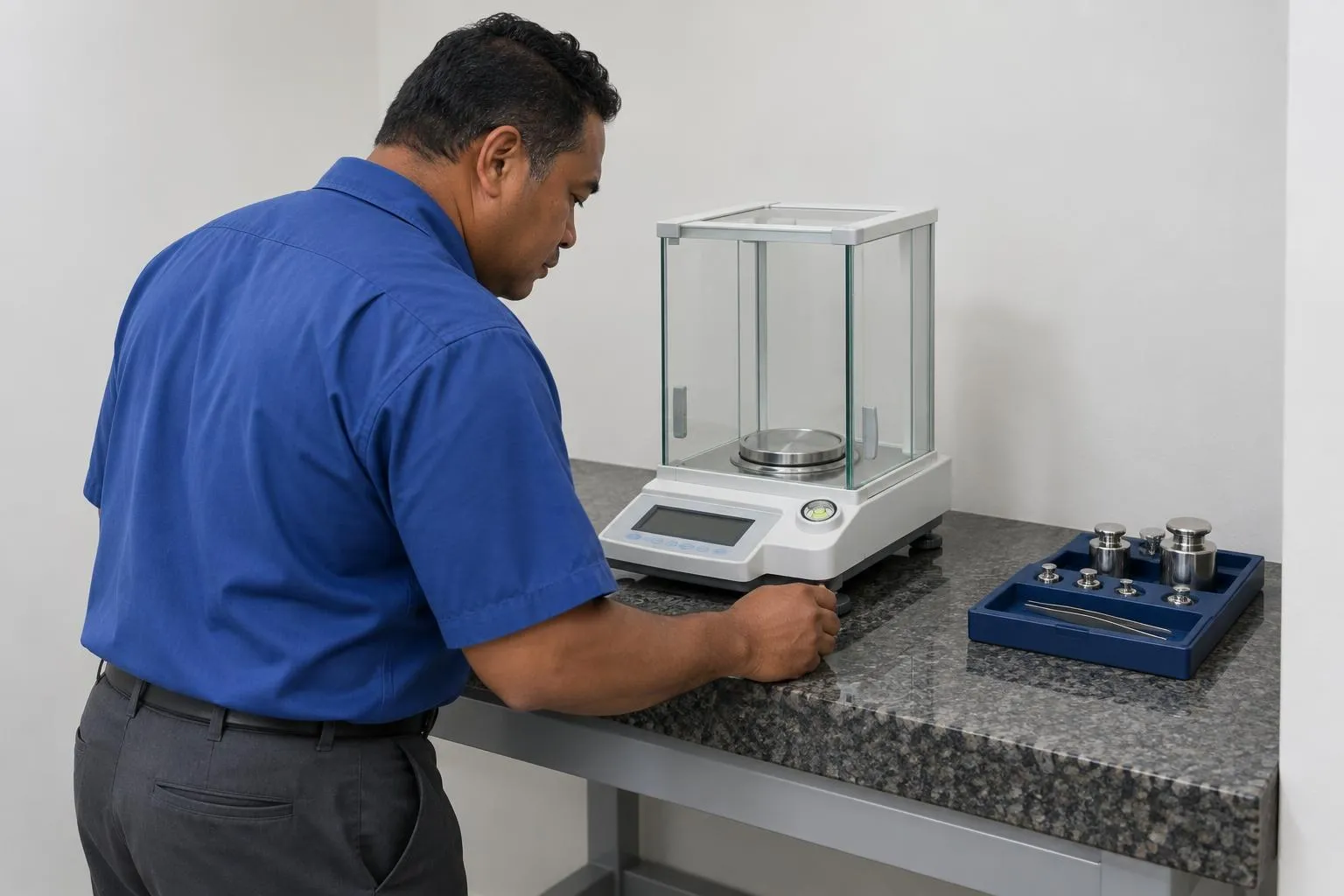
| Lab Balance Calibration | $372M | 6.5% | Pharma/biotech quality requirements |
| Life Sciences Validation | $2.7B (2024) | 6.7% | GxP compliance, ATMP manufacturing |
| Communications (5G/6G) | — | 9.1% | RF measurement scaling |
| Electronics Manufacturing | ~$1.8B | — | 27% of overall market |
Reality Check:The in-house vs. outsource split in medical calibration tells a nuanced story. In-house services hold 56.2% market share in that segment — not because outsourcing is inferior, but because healthcare facilities need rapid turnaround on critical equipment and can’t wait on a lab’s schedule. That’s a logistics preference, not a quality statement. For most industrial applications, accredited third-party labs remain the standard.
What This Means If You’re Sourcing Calibration Services Right Now
The quality manager I mentioned at the start isn’t unusual. The combination of growing demand, lab consolidation, and increasingly specialized scope requirements means that finding the right lab is harder than it was five years ago — even as the market itself is larger.
The labs worth working with in 2026 are investing in digital traceability, remote service capability, and ISO/IEC 17025 scopes that match your specific instrument types and measurement parameters. Verify scope certificates through A2LA or NVLAP before assuming a lab can handle your equipment.
For a deeper orientation on what to look for in an accredited lab — measurement uncertainty documentation, scope limitations, turnaround standards — see the Complete Guide to Calibration Laboratories.
Practical Bottom Line
The calibration industry is in a genuine growth phase, and the technology reshaping it — remote calibration, AI-driven maintenance prediction, cloud-based compliance platforms — will filter down to every quality team that relies on traceable measurement. Here’s what to do with that:
- Audit your current lab relationships — are they investing in digital infrastructure, or are you getting paper COCs in 2026?
- Ask about remote calibration eligibility for any instruments with connectivity — you may be able to cut lead times significantly
- Watch the scope certificates — as labs consolidate and specialize, verify your instruments still fall within their accredited parameters after any ownership changes
- Build in scheduling margin — demand in medical, electronics, and aerospace segments is tightening lab availability; last-minute calibration requests are getting harder to fill
The market is growing. That’s not automatically good news for buyers if demand is outpacing capacity in your segment. Get ahead of it.
Done reading? Get quotes from calibration laboratorys near you.
Takes about a minute. Free, no obligation; providers reply to you directly.
Popular cities:
Nick built this directory to help quality teams find accredited calibration labs without wading through unaccredited shops that can’t support an ISO audit — a gap he discovered when sourcing calibration vendors for a manufacturing client whose instrument traceability chain failed a third-party audit.