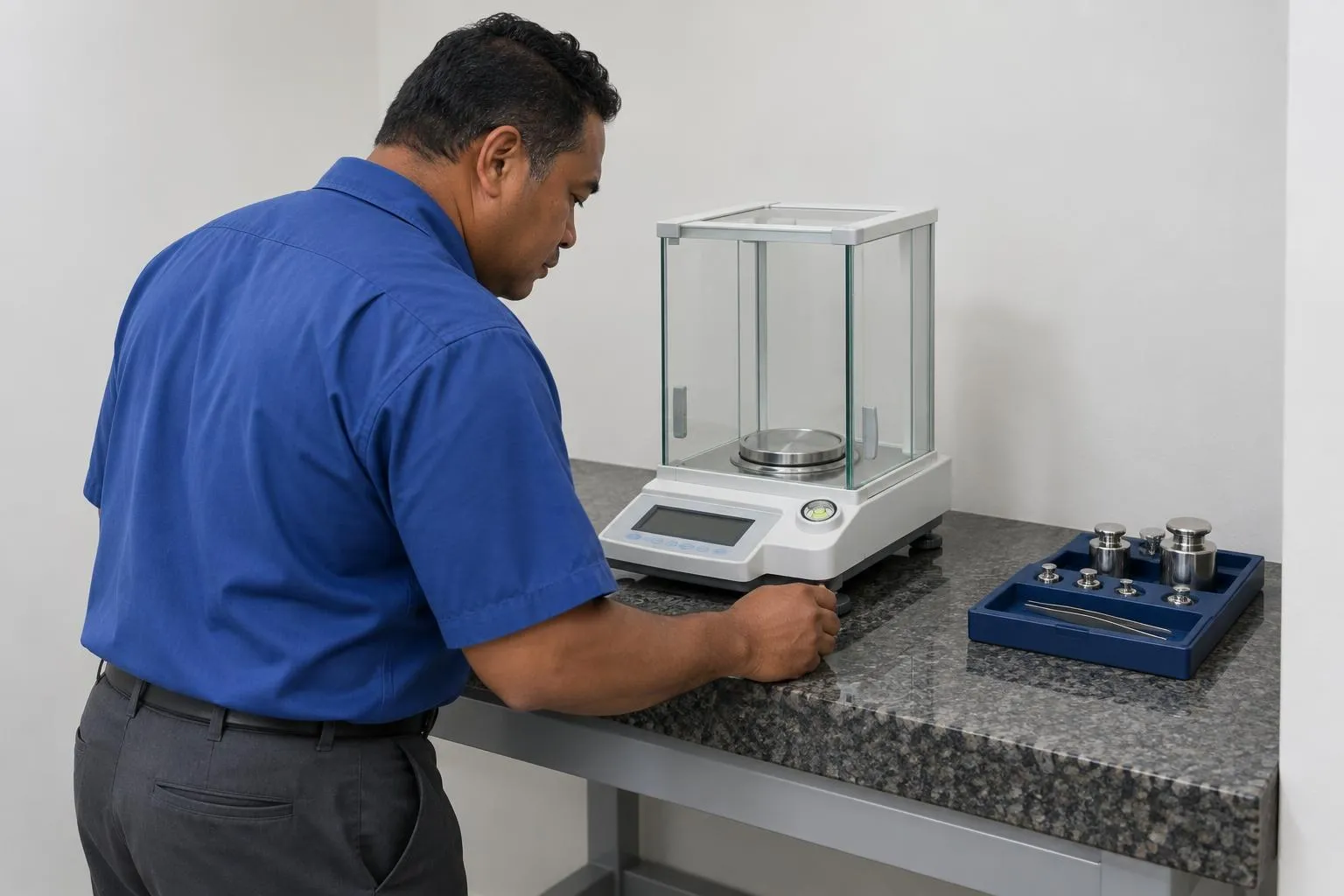
Calibration laboratorys listed in New York
See all 2 in New York →- 11.0★ (1) · factory trained and certified by laboratory equipment manufacturers · Panasonic Gold Club service provider
Cryostar Industries, Inc. provides laboratory equipment maintenance, repair, calibration, rentals, and loaner equipment for labs. It began operating in 1989 and serves laboratories in medicine, manufacturing, pharmaceuticals, biology, and technology across New York and the Tri-State Area. Its technicians are factory trained and certified by laboratory equipment manufacturers.
- 2Licensed in New York and Connecticut
Industrial Scale Repair & Service provides installations, calibrations, and state inspections for weighing needs across industries. It states that its mechanics are licensed in New York and Connecticut.
Get free quotes from calibration services in New York
Takes about a minute. Free, no obligation; providers reply to you directly.
My calibration instruments were spotting a 0.3mm gap in a precision housing when the client called to say their vendor had just been cited during an ISO 9001 audit — wrong calibration lab, no NIST traceability, whole production line on hold. That was the moment I started paying serious attention to which labs you can actually trust in New York.
The Short Version:For NYC metro, EML Calibration is your strongest all-borough on-site option (ISO/IEC 17025 accredited, 28+ years). Long Island goes to Trescal Bohemia or MCS Calibration. Western NY? Northeast Metrology Corp. has owned that market for 30 years. The mistake most quality managers make is choosing on price alone — accreditation scope matters more than the quote.
Key Takeaways:
- ISO/IEC 17025:2017 accreditation and NIST traceability are non-negotiable — check the lab’s A2LA or NVLAP certificate, not just their marketing copy
- On-site calibration isn’t a luxury; it’s often the smarter call for heavy or sensitive instruments that shouldn’t travel
- New York’s lab coverage is uneven — NYC and Long Island are well-served; western NY and upstate require more research
- For the full framework on what calibration labs actually do and what to ask before hiring, see The Complete Guide to Calibration Laboratories
What Makes New York’s Calibration Market Different
New York is not one market. It’s four, stacked on top of each other.
The five boroughs run on density — dozens of regulated industries (pharma, medical devices, electronics manufacturing, aerospace defense contractors in the outer boroughs) all competing for the same accredited labs. Long Island has a solid cluster of standalone labs serving aerospace and defense. Western New York around Rochester has its own ecosystem, largely built around optics, photonics, and precision manufacturing. And upstate — Troy, Poughkeepsie, Lakewood — is sparser, requiring you to either ship instruments out or negotiate mobile service agreements.
Nobody tells you this when you’re searching “calibration lab New York.” You get a mix of all four regions in a single list, which is how you end up booking a lab in Bohemia, Long Island for a job in Manhattan.
The Labs Worth Knowing About
Here’s an honest breakdown of the established providers across the state:
| Lab | Location | Experience | Accreditation | On-Site? |
|---|---|---|---|---|
| EML Calibration | NYC (all 5 boroughs) | 28+ years | ISO/IEC 17025:2017 | Yes |
| Garber Metrology | New York state | 45+ years (est. 1975) | NIST-traceable | Varies |
| Trescal | Bohemia, Long Island | National network | Accredited | Yes |
| Northeast Metrology Corp. | Rochester / Poughkeepsie | 30+ years | NIST-traceable | Yes |
| MCS Calibration | Holbrook, Long Island | — | NIST-traceable | — |
| IET Labs | Roslyn Heights, Long Island | — | — | — |
| Cryostar | Tri-state (NY/NJ/CT) | — | NIST-traceable | Yes |
For the New York City directory with contact details and current provider profiles, see the New York calibration laboratories listing.
EML Calibration: The NYC Default
If your facility is in the five boroughs and you want on-site service with a clean accreditation record, EML is the answer most quality managers land on. They’ve been doing this for 28 years, they cover Manhattan, Brooklyn, Queens, the Bronx, and Staten Island on-site, and their scope includes electronic, mechanical, and dimensional instrumentation — all NIST-traceable.
The practical advantage here isn’t just the accreditation. It’s that sending precision instruments across Manhattan in a courier van is a real risk. On-site eliminates that entirely.
Pro Tip:When vetting any lab, pull their actual A2LA or NVLAP scope certificate — not the PDF on their website, the live entry on the accreditation body’s database. Scope certificates specify exact parameters and measurement ranges. A lab can be “ISO 17025 accredited” for temperature and completely unqualified for your torque wrenches.
Long Island: Trescal and the Secondary Options
Trescal’s Bohemia lab (80 Orville Drive, Suite 115) is the most visible Long Island option — open Monday through Friday, 7:00 AM to 4:30 PM, reachable at (631) 563-3520. They’re part of a national network, which matters when you need consistent calibration standards across multiple facilities.
MCS Calibration in Holbrook and IET Labs in Roslyn Heights round out the Long Island cluster. If your operation is aerospace or defense — and there’s a lot of that on Long Island — you’ll want to verify each lab’s specific scope against AS9100 requirements, not just general ISO 17025.
Reality Check:National chain labs like Trescal bring standardization across locations, but local independent labs sometimes offer faster turnaround for specialized instruments. It’s worth getting quotes from both.
Western NY and Upstate: Different Physics
Rochester is dominated by Northeast Metrology Corp., which has been the go-to for western NY for 30+ years. Their value proposition is explicit: on-site calibration without instrument relocation. For optics and photonics manufacturers — which Rochester has plenty of — this matters. You don’t ship a precision interferometer across town if you can avoid it.
Upstate options thin out quickly. Dorsey Metrology, HJM Precision, and Amtronix cover some of the Poughkeepsie and Troy corridors, but if you’re in a specialty area, expect to either negotiate a service contract with a Rochester or Long Island lab or build in lead time for in-lab work.
What to Actually Ask Before You Hire
Most RFQs focus on price. That’s the wrong starting point.
The questions that separate adequate labs from genuinely good ones:
- What is your calibration scope? Not “are you accredited” — what specific parameters, instruments, and measurement ranges does your certificate cover?
- What are your uncertainty budgets for this instrument type? A lab that can’t answer this in concrete numbers is giving you compliance theater, not measurement confidence.
- What’s your turnaround for on-site service? Downtime is the hidden cost. An on-site lab that books three weeks out may be slower than shipping to a faster in-lab option.
- How do you handle out-of-tolerance findings? Do they notify you immediately? Provide as-found / as-left data? This matters for your CAPA documentation.
The pricing question comes last, after you know you’re comparing equivalent services.
Practical Bottom Line
The New York calibration market is mature and well-covered in the metro and Long Island — you have real choices. The trap is treating all accredited labs as interchangeable commodities.
Here’s what to do next:
- Identify your instrument categories (electronic, dimensional, thermal, pressure, torque) and confirm any candidate lab holds scope for all of them
- Check the live accreditation database at A2LA.org or NVLAP before signing anything
- Get on-site quotes if your instruments are heavy, sensitive, or can’t leave your facility — the premium is usually worth it
- Browse the New York provider directory to compare current labs by borough and region
For a deeper breakdown of how calibration intervals work, what NIST traceability actually means in practice, and how to build a calibration management program, the Complete Guide to Calibration Laboratories covers all of it.
The right lab isn’t the cheapest one or the most famous one. It’s the one with the right scope certificate and the right service model for how your facility actually operates. That’s a 10-minute research job that saves you from a very expensive audit finding.
Done reading? Get quotes from calibration laboratorys in New York.
Takes about a minute. Free, no obligation; providers reply to you directly.
Popular cities:
Nick built this directory to help quality teams find accredited calibration labs without wading through unaccredited shops that can’t support an ISO audit — a gap he discovered when sourcing calibration vendors for a manufacturing client whose instrument traceability chain failed a third-party audit.